Robots · Humanoids
LimX Dynamics Oli teleoperation: every building block for whole-body teleop, and the work of putting them together
Oli is a 165 cm humanoid that LimX ships with a Remote Control API, an optional data-collection package and an open motion-retargeting tool. There is no turnkey teleop service, so the assembly is where programs succeed or stall.
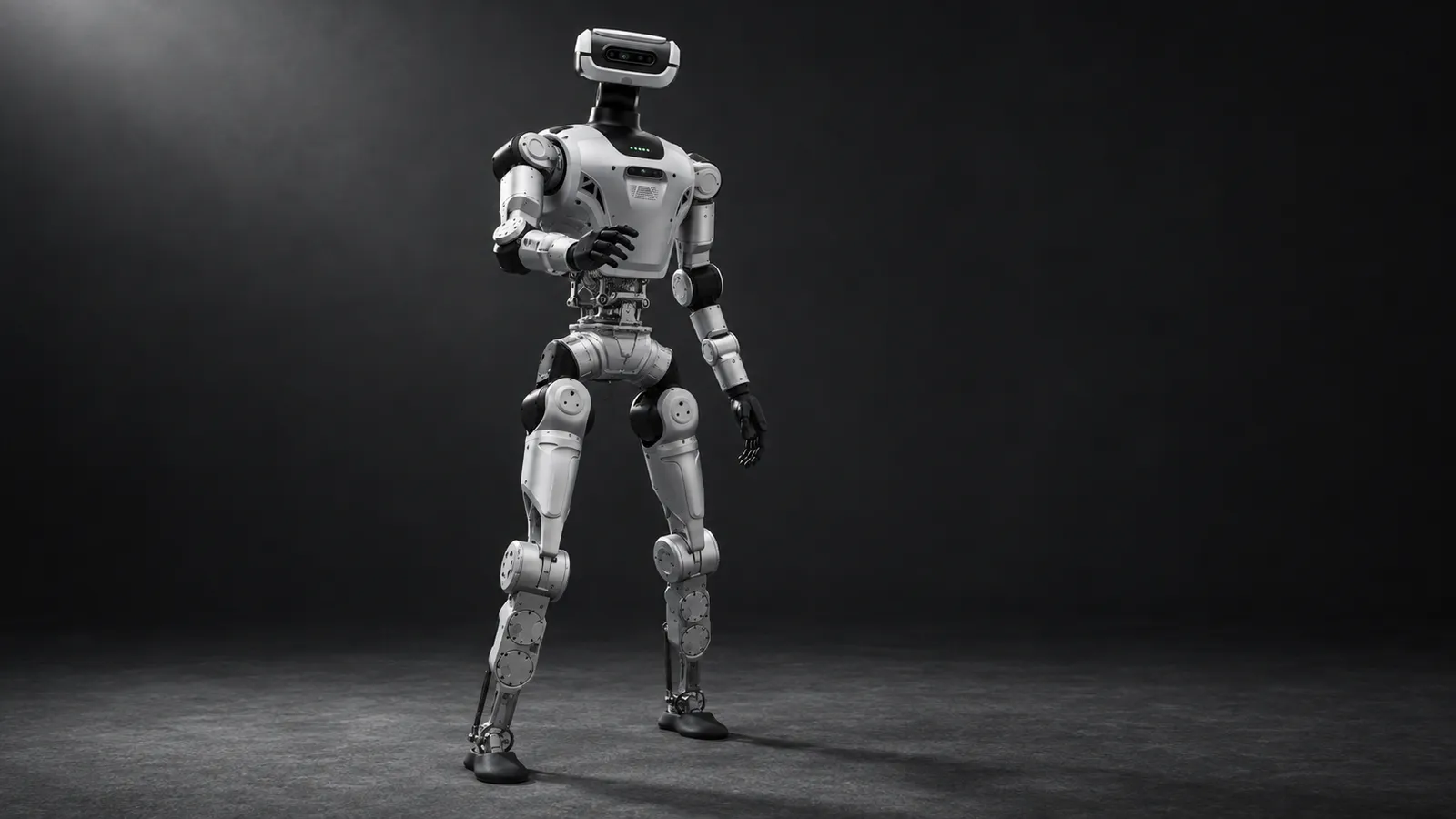
- Height and weight
- 165 cm; 55 kg or less with battery
- Degrees of freedom
- 31 in the body (7 per arm, 6 per leg, 3 waist, 2 neck); 33 active total on the EDU spec
- End effectors (optional)
- 5-finger hand (6 DoF), 3-finger gripper (4 DoF), 2-finger gripper (1 DoF)
- Arm load and torque
- Up to 3 kg per arm; 150 N·m max joint torque
- Battery
- 9,500 mAh slide-out module, about 1.5 h
- Compute
- RK3588 for motion control; Orin NX (157 TOPS) for perception; optional AGX Orin backpack (275 TOPS)
- Sensors
- Head, chest and hip depth cameras, wrist camera mount, 6-axis IMU
- Developer interfaces
- Remote Control API, Sensor API, low- and high-level motion APIs, optional Studio Package
Updated
LimX Dynamics' Oli is a 165 cm, 55 kg humanoid with 7-DoF arms, a 3-DoF waist and a 2-DoF neck, launched in July 2025 for researchers, developers and integrators. On paper it has more teleoperation building blocks than most robots in its class: a Remote Control API, a high-level motion API that includes remote operation, an optional Studio Package with data collection, and an open motion-retargeting tool that maps Xsens, OptiTrack and PICO streams onto Oli. LimX's launch note says developers can use the SDK for teleoperation and imitation-learning pipelines without changing the underlying architecture. What it does not provide is a finished teleop app or the people to run it. This page covers how the pieces fit together.
The building blocks LimX gives you
APIs on the robot
limxsdk-lowlevel
GMR motion retargeting
Studio Package (optional)
Simulation and deployment
Licensing check: GMR itself is MIT, but it does not bundle the SMPL-X body models, which are under a non-commercial license, and AMASS motion data has its own non-commercial license. Live Xsens, OptiTrack or PICO streams avoid those datasets; a pipeline that retargets from AMASS or depends on SMPL-X models needs a commercial license before it feeds a product.
Editions: confirm what you are buying
LimX announced Oli in three editions, Lite, EDU and Super, without publishing a per-edition breakdown, and its spec page notes that certain features may not be available in all versions. Knox Labs' US listing gives edition-dependent ranges: 165 to 175 cm, up to 55 to 60 kg, 31 to 43 active DoF, 3 to 5 kg per arm and about 1.5 to 2 hours of runtime, with wrist and hip cameras, LiDAR and 5G on selected editions. Before you order, get in writing which edition you are buying, which end effector, which compute (Orin NX alone or with the AGX Orin backpack), and whether the Studio Package is included. Each of those changes the data you can record.
First week: simulation, then the real robot
LimX's deploy repo lays out a path that is worth following exactly, because it is also how operators should learn the robot.
In MuJoCo
On the robot
Before any operator session
Putting a whole-body teleop stack together
Oli's toolset points toward full-body teleop rather than hands-only VR. A workable architecture has four parts.
Capture
Retarget
Control on the robot
Video and stop
For upper-body-only work, a simpler setup works: a joystick drives the high-level walking API while a headset or GMR drives the arms, waist and neck. That is easier to staff and gives cleaner manipulation data, at the cost of the legs not being part of the demonstration.
Hands and grippers
Oli offers three end effectors: a 6-DoF five-finger hand, a 4-DoF three-finger gripper and a 1-DoF two-finger gripper. The choice decides how hard teleop is. A two-finger gripper maps from a pinch or a trigger and is easy to make consistent across operators. A five-finger hand needs finger tracking (gloves or headset hand tracking) and its own retargeting, and the operator's technique matters much more. Start with the simplest end effector the task allows, and keep each end effector in its own dataset. With a 3 kg arm load, choose objects well under the limit at full reach.
A data detail specific to Oli: parallel joints
LimX's deploy repo documents a mapping for the parallel mechanisms in Oli's ankles and waist, between the joint space a policy reasons in and the actuator space the motors use. Record one of them consistently, joint space is the usual choice, and state which in the dataset card. A dataset that mixes the two, or switches when the SDK version changes, will look fine in a plot and train badly. Our data collection guide covers the rest of the episode structure.
Latency
Whole-body teleop is the most latency-sensitive kind: the operator's body is the controller, so a lagging robot breaks the sense of embodiment fast. Keep capture and retargeting near the operator, the balance controller on the robot, and only joint targets and video on the network. Below about 100 ms round trip, full-body mimicry works well for slow motions. Between 100 and 200 ms, restrict the operator to upper-body motion with joystick walking. Above that, use teleop for positioning and supervision only. Our latency guide covers budgets by task.
What a good Oli operator does
Why Oli costs more in the US than in China
At launch LimX sold Oli in Mainland China only, from RMB 158,000, about $21,800. The US listing at Knox Labs starts at $72,000 and is priced on request, with freight, customs, training and integration quoted separately and a full deposit required. Part of the gap is what a reseller quote covers or prices separately, and the edition matters too: LimX's own spec shows optional hands, cameras, LiDAR and a computing backpack. Compare quotes on the same edition and end effectors.
As of October 2026, foreign-produced advanced robotic devices are on the FCC Covered List under FCC public notice DA 26-786 (July 28, 2026), unless the Department of War grants them a Conditional Approval. The FCC definition covers mobile robots, including humanoids, quadrupeds and autonomous mobile robots, that weigh over 4.4 lb with any base or dock and have a sensor, network connectivity and control software, when they do not qualify as US-made under the federal Buy American test, whatever the nationality of the maker. Covered models cannot receive new FCC equipment authorizations, which most devices need before they can be imported or sold in the US, while the FCC says models it authorized earlier can still be imported, sold and used; US buyers should confirm the current status with the seller.
Oli or another full-size humanoid?
Oli's strengths are its body (7-DoF arms, 3-DoF waist), its documented APIs, and a retargeting tool that supports it directly. Its weakness for a data program is that nothing is assembled for you. If you want a full-size robot with a maintained XR teleop app today, the Unitree H2 is supported by Unitree's xr_teleoperate. If your program is whole-body motion data from mocap, Oli's toolset is closer to what you need out of the box.
Takeover and fallback
When Oli runs a policy, the Remote Control API and the high-level remote-operation mode are the takeover path: an operator takes the robot, finishes the step and hands back, and the correction is recorded. Our human-in-the-loop guide covers escalation design.
How RoboPilots runs Oli teleoperation
Your robot stays at your site. We agree the capture and teleop setup with you, from joystick-plus-VR to full-body mocap through GMR, connect operators through a computer on your network, and train a dedicated group of operators on your unit and your protocol, including start-up and stop. Several humanoid makers have sent us robots to test our operating protocols, and that is where each new program begins.
One-week trial
Coverage
Data
Interfaces, specs and sources
- Remote Control and High-Level Motion APIs
- limxsdk-lowlevel (C++ / Python)
- GMR retargeting (Xsens, OptiTrack, PICO)
- Studio Package (data collection, optional)
- humanoid-mujoco-sim
- Virtual and handheld joystick
Availability: Buyable, by quote. LimX launched Oli on July 30, 2025 in Lite, EDU and Super editions, for Mainland China first. It was listed from RMB 158,000 (about $21,800) at launch, per TechNode. In the US it is listed from $72,000 by Knox Labs, a reseller, as of October 2026, with pricing by quote and freight, customs, training and integration quoted separately. LimX's own pages show no price. US buyers: see the FCC note on foreign-produced robots (DA 26-786).
Specs are the maker's published figures, checked on . RoboPilots is not affiliated with LimX Dynamics; product names are trademarks of their owners.
- LimX Dynamics Oli product page
- LimX Dynamics Oli specifications
- LimX Dynamics Oli launch announcement (July 30, 2025)
- TechNode: LimX Oli launches from RMB 158,000
- Knox Labs: LimX Oli US listing
- LimX Dynamics repositories (GitHub)
- GMR: LimX fork of General Motion Retargeting (GitHub)
- limxsdk-lowlevel (GitHub)
- humanoid-rl-deploy-python (GitHub)
- Unitree xr_teleoperate, for comparison (GitHub)
- FCC public notice DA 26-786: foreign-produced robots added to the Covered List (July 28, 2026)
Frequently asked questions
- Can LimX Oli be teleoperated?
- Yes, through its Remote Control API and high-level remote-operation mode, and LimX says its SDK supports teleoperation and imitation-learning pipelines. There is no official turnkey teleop app, so teams assemble one.
- Can Oli be teleoperated with a PICO headset or a mocap suit?
- LimX's GMR fork retargets live PICO, Xsens and OptiTrack streams onto Oli in real time. A whole-body controller on the robot then has to track that motion while keeping balance.
- Why is LimX Oli about $22K in China and $72K in the US?
- The China price is LimX's launch price for a China-first product. The US price is a reseller listing priced on request, with freight, customs, training and integration quoted separately, and the configuration varies.
- Does LimX Oli have hands?
- Hands are optional: a 6-DoF five-finger hand, a 4-DoF three-finger gripper or a 1-DoF two-finger gripper.
- How long does the LimX Oli battery last?
- LimX lists about 1.5 hours from a 9,500 mAh slide-out battery module that can be swapped.