Robots · Humanoids
Figure 03 teleoperation: how Helix was trained and why operator data still matters
Figure publishes more about its training data than most humanoid makers. The record shows a company moving from teleoperation toward human video and paid human data, without ever leaving people out of the loop.
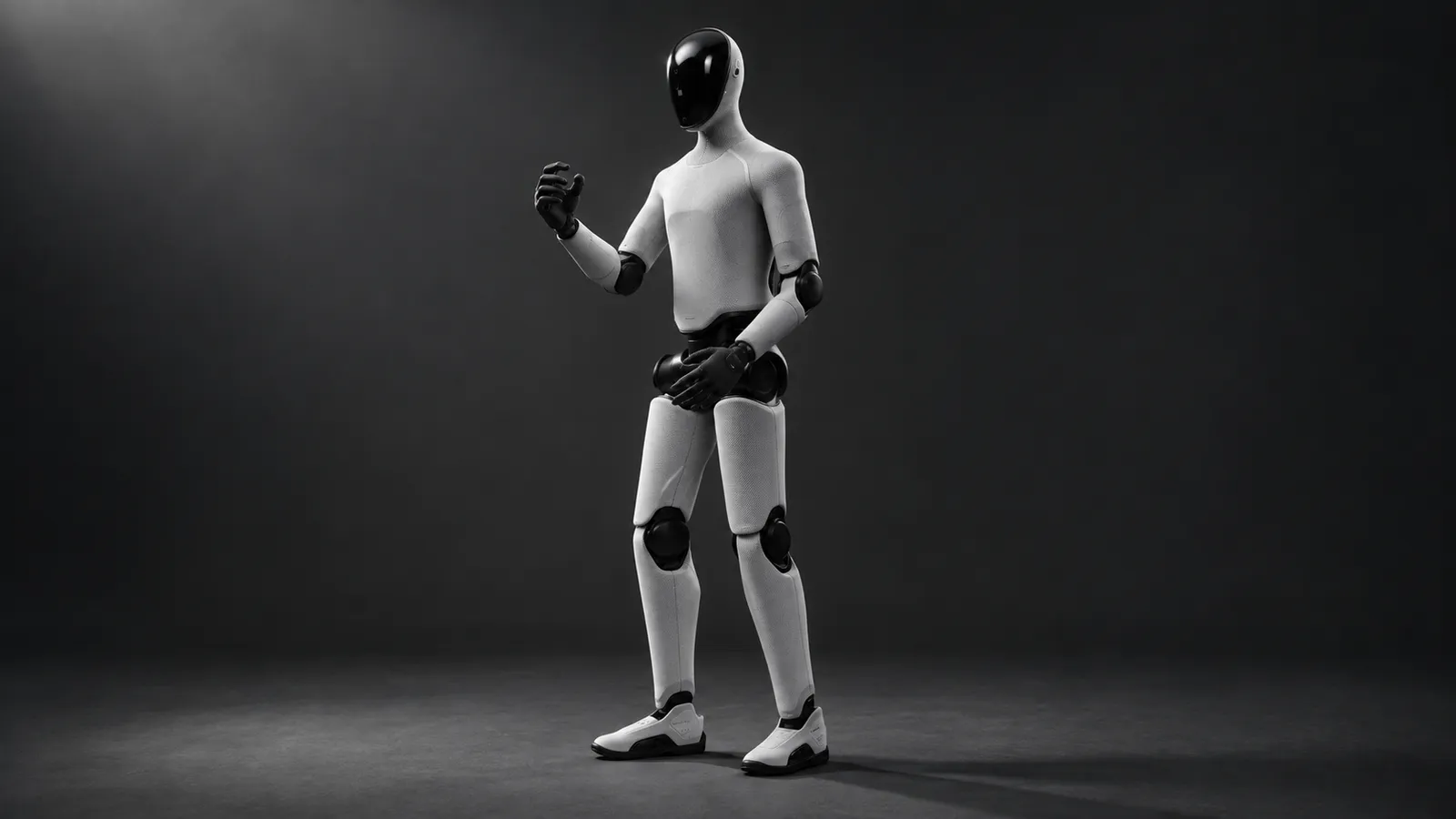
- Height
- 5 ft 8 in
- Weight
- 61 kg
- Payload
- 20 kg
- Run time
- 5 h
- Walking speed
- 1.2 m/s
- Hands
- Palm camera in each hand; fingertip sensors detect about 3 g
- Charging
- 2 kW wireless, through coils in the feet
- Data offload
- 10 Gbps mmWave
Updated
Figure 03 is the third-generation humanoid from Figure AI, launched on October 9, 2025 and pitched for both commercial work and the home. You cannot buy one. What you can do is read what Figure has published about how its robots learn, which is unusually specific: hours of teleoperation, the architecture of its Helix models, and a paid network for collecting human data. For anyone building their own humanoid data program, that record answers a practical question: how much human operation does a well-funded humanoid company still need?
Can you buy a Figure 03?
No. The Figure 03 product page lists specs and a contact form, but no price, order button or delivery date as of October 2026. Figure deploys robots through its own commercial agreements. According to the Figure AI entry on Wikipedia, CEO Brett Adcock said in May 2026 that Figure would soon lease robots for home use at about $600 a month, and more than 350 Figure 03 units had been delivered by April 2026. Neither is an offer you can take up today: there is no lease sign-up on Figure's site. If you need a humanoid with operators on it this quarter, see the alternatives near the end of this page.
How Helix was trained: 500 hours of teleoperation
When Figure introduced Helix in February 2025, it described the training set plainly: "a high quality, multi-robot, multi-operator dataset of diverse teleoperated behaviors, ~500 hours in total". Figure noted that this is a small fraction of the data behind earlier vision-language-action models. Three details from that post matter to anyone collecting humanoid data:
Many operators, on purpose
Labels written after the fact
A fast controller under a slow planner
Helix 02, Project Go-Big and Figure Index
Figure's later work broadened where the human data comes from, rather than removing it.
Helix 02 (January 2026)
Project Go-Big (September 2025)
Figure Index (2026)
Read in order, Figure's data story goes: teleoperated robot episodes, then retargeted human motion, then first-person human video, then a paid global network of people recording their day. Each step makes data cheaper per hour. None removes the human. They change where the human sits, from inside the robot to in front of a camera.
Is Figure 03 teleoperated?
The honest answer has two parts. Figure says its Helix 02 showcase videos are fully autonomous, and it labels them that way, which is more than most makers do. At the same time, Figure's own training record and hiring show teleoperation is part of how the robots learn and are run. A Figure job listing for a humanoid robot operator in San Jose, at $25 to $35 an hour and removed in January 2026, said the operator "may wear teleoperation equipment and guide the robot through designated behaviors", uploads collected data to the AI training system, and keeps the robot running for the customer use case all day. That is a human-in-the-loop role: part data collector, part on-site fallback.
Teleoperation in training and autonomy in a labeled demo are not in conflict. Most humanoid programs use operator episodes to teach a behavior, then show the policy running it. Our guide to human-in-the-loop humanoid robots explains how takeovers become correction data once a policy is deployed.
Fast policies, slow networks: where teleop fits the control loop
Figure's published rates show why humanoid teleoperation is layered. Helix 02's System 0 runs at 1 kHz and System 1 at 200 Hz; no human, local or remote, closes a loop that fast. What an operator supplies is the slower layer: where to walk, what to reach for, how to shape the grasp. The robot's own controllers turn that into balanced joint commands. That split is also what makes remote operation possible at all, because a learned balance and tracking layer on the robot absorbs network delay that would otherwise make a 61 kg biped unsafe to drive.
In practice that gives three regimes on any modern humanoid. With an operator on site or in the same metro, round trips are short enough for direct upper-body teleop of fine tasks. Across a region, coarse manipulation and walking commands stay comfortable while precise contact slows down. At intercontinental distances, the operator supervises a running policy and takes over only when it stalls. Our latency guide sets out the budgets by task, and they apply to Figure-class robots as much as to research platforms.
Hardware built for data collection
Figure 03's launch post reads like a list of data-pipeline requirements turned into hardware:
Cameras
Touch
Offload
Uptime
Figure 03 vs Figure 02
Figure 02, introduced in August 2024, had five-fingered hands with 16 degrees of freedom, six RGB cameras and a 25 kg carry rating, per Wikipedia. Figure 03 has 9 percent less mass than Figure 02, actuators Figure describes as twice as fast, the new camera system and the tactile, camera-equipped hands. Figure announced its BMW partnership, to deploy humanoids in car manufacturing, in January 2024, and a Helix 02-powered Figure 02 was shown loading a dishwasher in early 2026. For data purposes the change that matters most is the hand: tactile and in-palm vision streams add channels a Figure 02 dataset simply does not have, so data from the two generations is not interchangeable.
What Figure's numbers mean for your own program
Our teleoperation data collection guide covers how to plan hours, operators and quality checks for a program of that shape.
If you need humanoid operators today
Since a Figure 03 is not available, teams that want to collect teleop data on a humanoid now usually start with a robot they can buy and develop on. The Unitree G1, listed at $13.5K for the base model by Unitree as of October 2026 (EDU, needed for development, by quote), has the largest open teleop and dataset ecosystem. The full-size Unitree H2 suits tasks that need adult reach, and Unitree added it to its open xr_teleoperate stack in v1.6.
How RoboPilots runs humanoid operators
Several humanoid makers have sent RoboPilots robots to test our operating protocols. On a customer program, the robot stays at your site and we train a dedicated group of operators on your unit and task protocol, so the dataset reflects a consistent, documented way of doing each task.
One-week trial
Coverage
Data
Interfaces, specs and sources
- Helix / Helix 02 VLA (on-board)
- Teleoperation equipment (Figure operators)
- Human video and motion data
- Figure Index app (human data)
- No public SDK
Availability: Not publicly for sale. Figure's product page lists no price and no order option, only a contact form, as of October 2026. Adcock said in May 2026 that Figure would soon lease robots for home use at about $600 a month (as reported on Wikipedia); no lease offer appears on Figure's site as of October 2026.
Specs are the maker's published figures, checked on . RoboPilots is not affiliated with Figure AI; product names are trademarks of their owners.
- Figure 03 product page and specifications
- Figure: Introducing Figure 03, Oct 9, 2025
- Figure: Helix, Feb 20, 2025
- Figure: Helix 02, Jan 27, 2026
- Figure Index app
- Figure AI (Wikipedia)
- Humanoids Daily: Figure launches Project Go-Big, Sep 2025
- Figure humanoid robot operator job listing (Built In)
- Unitree xr_teleoperate (GitHub)
- Unitree G1 product page
Frequently asked questions
- Can I buy a Figure 03?
- No. Figure lists no price or order option for Figure 03 as of October 2026 and deploys robots through its own commercial agreements. Its CEO has spoken about a future home lease, but no offer is open on Figure's site.
- Is Figure 03 teleoperated?
- Figure labels its Helix 02 showcase videos as fully autonomous. Teleoperation is part of how Figure trains and runs its robots: Helix was trained on about 500 hours of teleoperated data, and Figure has hired operators who may wear teleoperation equipment.
- What data was Helix trained on?
- Figure says the original Helix used about 500 hours of high-quality, multi-robot, multi-operator teleoperation data, with instructions written afterwards by a vision-language model. Helix 02 added a whole-body controller trained on over 1,000 hours of retargeted human motion plus simulation.
- What is Figure Index?
- An app-based network where contributors are paid by the minute to record themselves doing everyday tasks with a recording device, to build a human dataset for Figure's robots. Figure reports $35M paid out across 111 countries.
- How much does Figure 03 cost?
- Figure has not published a price. In May 2026 its CEO said a home lease of about $600 a month was coming, as reported on Wikipedia, but there is no listed price or lease offer.