Robots · Humanoids
UBTech Walker S2 teleoperation: a 24/7 robot needs 24/7 operators
The Walker S2 swaps its own battery in about three minutes, so it can work through the night. The people who supervise it, take over when it stalls and collect its training data have to as well.
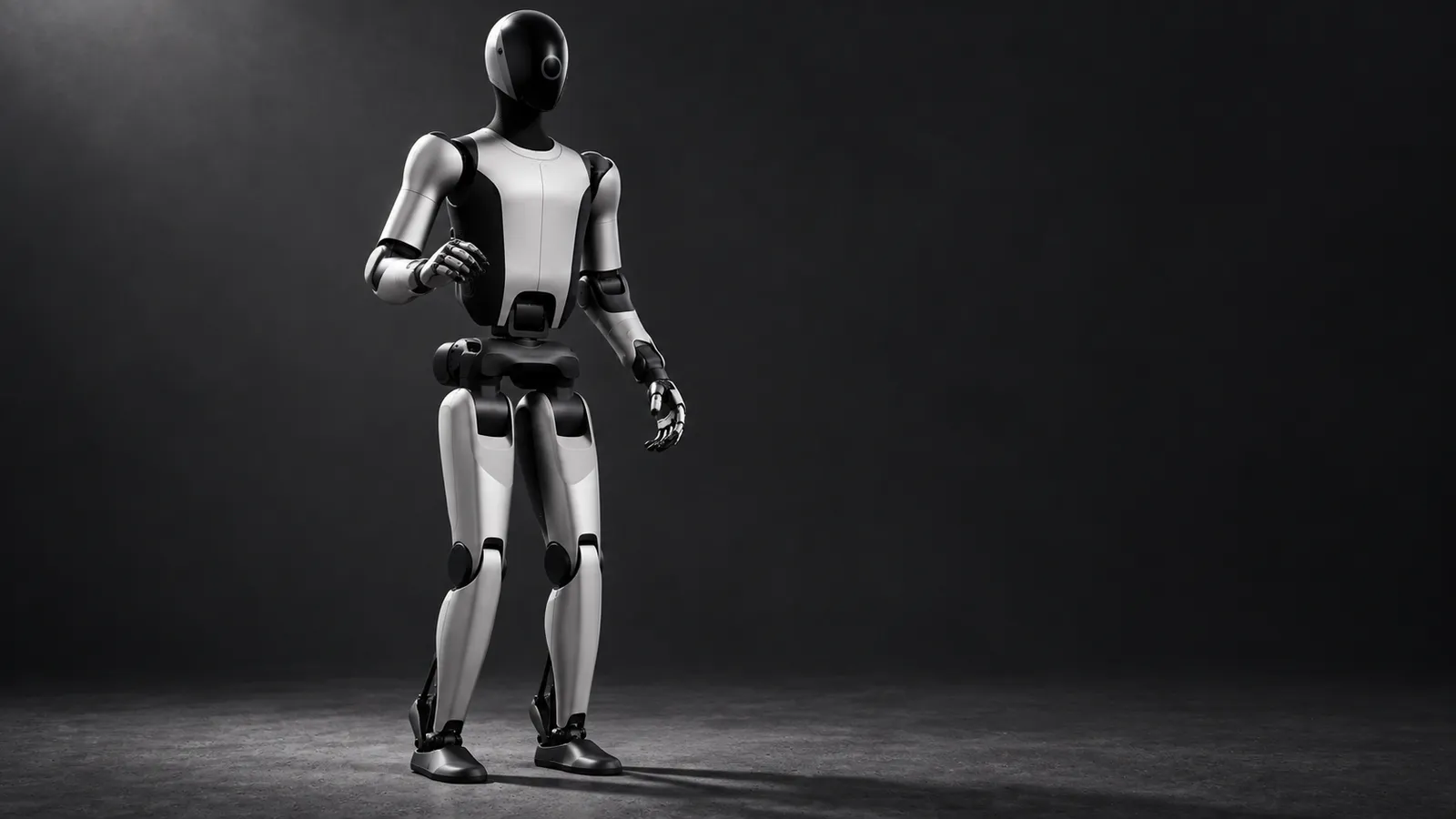
- Battery
- Dual battery; autonomous hot swap within 3 minutes
- Payload
- 15 kg, within a 0 to 1.8 m workspace
- Waist and torso
- ±162° waist rotation, 125° torso pitch
- Head vision
- Binocular RGB stereo with learned depth; 2 fisheye + 2 RGB cameras
- Body cameras
- RGB-D at the pelvis and on the back
- Hands and force
- Two dexterous hands, two six-axis force sensors
- Connectivity
- Gigabit Ethernet and USB 3.0 port; rear emergency stop
- Software
- BrainNet 2.0 and Co-Agent industrial agent
Updated
The UBTech Walker S2 is an industrial humanoid built for factory floors, and its signature feature is that it changes its own battery. UBTech says the S2 swaps a battery autonomously within three minutes, using a dual-battery design and both arms, and chooses between swapping and charging based on task priority, which UBTech markets as 24/7 continuous operation. That changes the teleoperation question. When a robot no longer stops to charge, the limit on how many hours it really works moves to the people around it: who supervises it overnight, who takes over when it stalls, and who keeps collecting the data that makes it better.
Who can buy a Walker S2
UBTech sells the S2 directly and through partners, and publishes no price; the Walker S2 page ends with a request to get in touch or become a partner. The order book is large. In September 2025 UBTech announced a RMB 250 million Walker S2 order from an unnamed domestic company, and said it expected annual capacity above 1,000 units, per Gasgoo. In a November 2025 release it reported Walker orders above RMB 800 million and said it had begun delivering several hundred Walker S2 units, with a target of 500 that year.
Outside China, the visible route is partnerships. The Asia Business Daily reported in May 2026 that Korea's Polaris AI ran Walker S2 operation and SDK development training with UBTech engineers, receiving the development environment and motion-control code, working on hand joint control and verifying basic box handling. If you are planning an S2 program outside China, expect that kind of onboarding to be part of the purchase.
As of October 2026, foreign-produced advanced robotic devices are on the FCC Covered List under FCC public notice DA 26-786 (July 28, 2026), unless the Department of War grants them a Conditional Approval. The FCC definition covers mobile robots, including humanoids, quadrupeds and autonomous mobile robots, that weigh over 4.4 lb with any base or dock and have a sensor, network connectivity and control software, when they do not qualify as US-made under the federal Buy American test, whatever the nationality of the maker. Covered models cannot receive new FCC equipment authorizations, which most devices need before they can be imported or sold in the US, while the FCC says models it authorized earlier can still be imported, sold and used; US buyers should confirm the current status with the seller.
What the S2 gives a remote operator
UBTech's hardware diagram for the S2 lists the parts that matter for teleoperation and data:
Head
Body
Hands
Reach and strength
Service ports
A rear emergency stop is easy for a floor associate to reach and invisible to a remote operator. On any S2 program, write down who on site holds stop authority on each shift, and make sure the remote operator can call them instantly.
24/7 battery swaps need 24/7 people
Battery swapping solves the energy side of round-the-clock work. It does not solve the exceptions. A robot working three shifts will meet a mispicked part, a tote in the wrong place or a blocked path on every one of them, and night shifts usually have the fewest people on the floor to help. UBTech's BrainNet 2.0 and Co-Agent system is aimed at coordinating fleets of robots on production-line tasks. Whatever the autonomy level, someone has to watch the fleet, decide when a robot needs help, and either guide it remotely or send a person.
Supervision
Takeover
Collection
Our human-in-the-loop guide for humanoid robots covers how teams structure those three roles and log what they do.
Planning coverage for a fleet that never charges
A robot that works every hour of the week offers 168 robot-hours, against about 40 for a single day shift. Staffing that with people on site alone means three or four shift crews, most of whom spend the night waiting for something to go wrong. A remote desk changes the arithmetic: the same trained people can watch a whole fleet, step in only when a robot asks, and rotate across time zones so nobody works a permanent night shift. How many robots one person can cover depends on the incident rate on your line, which is exactly what a trial week should measure before anyone commits to a ratio. Plan for the rate to fall as the robots learn from the takeovers, and revisit the staffing model every few weeks rather than fixing it at launch.
The GHRC 2026 baseline: a public S2 teleop and data pipeline
The most concrete public look at S2 data is the Global Humanoid Robot Challenge 2026 baseline, published by UBTech under Apache-2.0. It runs a Walker S2 in NVIDIA Isaac Sim with a 20-dimensional state (14 arm joints, 4 gripper joints and 2 gripper commands) and four RGB cameras: head left and right, and both wrists. The workflow covers keyboard teleoperation, recording, replay, policy inference and an automated collection tool, and it supports ACT, Diffusion Policy, π0, π0.5 and SmolVLA through LeRobot. The training data is exported in LeRobot v3.0 format to the challenge2026_dataset on Hugging Face, about 3.59 million rows sampled at roughly 30 Hz.
Two practical notes. First, keyboard teleop is a quick way to start in simulation, but it moves one axis at a time and produces staircase trajectories that policies copy; for data you plan to train on, a VR headset with hand tracking or a leader device gives far more natural motion. Second, UBTech's WalkerS2-Model repository provides URDF files for ROS and Gazebo and USD files for Isaac Sim, which it describes as suitable for the Walker S2 EDU and as the official simulation models for the challenge. UBTech notes the parameters are for reference and should be adjusted to real hardware. The dataset card did not show a license when we checked, so confirm terms before using it commercially.
Building teleoperation on a real S2
UBTech has not published a public teleop stack for the S2, so real-robot teleop runs on the SDK access that comes with partner onboarding. The usual design on a humanoid this size is a split: the robot's own whole-body controller keeps balance during squats and lifts, the operator's headset streams head and hand poses mapped onto the arms, hands and head, and walking is steered with a controller. The binocular head cameras feed the headset; the wrist force sensors give the data its contact signal.
Latency decides where the operator can sit. Supervising and directing a robot tolerates a long round trip, so a remote desk can be in another region or time zone. Directly driving 15 kg loads in a stoop lift does not; for that, the operator needs a short network path and the robot needs local speed and force limits that hold whatever the network does. Our teleoperation latency guide sets out budgets by task.
Recording S2 data for training
Format
Streams
Action space
Battery swaps
Our data collection guide covers episode structure and quality checks.
Walker S2 compared with Agility Digit 5
The two industrial humanoids solve uptime differently. The S2 swaps a battery in about three minutes and handles 15 kg across its workspace with dexterous hands. Agility's Digit 5, unveiled in September 2026, recharges fast instead, with a 90-minute battery that charges in 9 minutes, and lists repeated lifts of up to 50 lb with swappable end effectors. Both push working hours toward the full day, and both make exception coverage the next bottleneck. See our Agility Digit page for that robot.
What a good S2 operator does
How RoboPilots runs a round-the-clock S2 fleet
Several humanoid makers have sent RoboPilots robots to test our operating protocols. For a Walker S2 program we train a dedicated group of operators on your own units and your task and incident protocol, and keep the same group on your fleet so they learn its stations and quirks.
One-week trial
Coverage
Data
Interfaces, specs and sources
- SDK via UBTech partner training
- WalkerS2-Model URDF / USD
- GHRC 2026 Isaac Sim baseline (LeRobot v3.0)
- Gigabit Ethernet / USB 3.0
- BrainNet 2.0 + Co-Agent
Availability: Sales-led, mainly through UBTech and its partners; no public price. UBTech reported Walker orders above RMB 800 million and deliveries of several hundred Walker S2 units in November 2025. Its product page asks buyers to contact UBTech or become a partner; outside China, access to the SDK has come through partner training, such as Polaris AI in Korea in May 2026. US buyers: see the FCC note on foreign-produced robots (DA 26-786).
Specs are the maker's published figures, checked on . RoboPilots is not affiliated with UBTech Robotics; product names are trademarks of their owners.
- UBTech Walker S2 product page and hardware diagram
- UBTech Walker orders above RMB 800 million, Nov 17, 2025 (PR Newswire via AAP)
- Gasgoo: UBTech RMB 250 million Walker S2 order, Sep 2025
- Asia Business Daily: Polaris AI Walker S2 SDK training, May 28, 2026
- GHRC 2026 baseline repository (GitHub)
- UBTECH-Robotics/challenge2026_dataset (Hugging Face)
- WalkerS2-Model URDF and USD (GitHub)
- x-humanoid-training-toolchain (GitHub)
- Agility: Digit 5 unveiled, Sep 15, 2026
- FCC public notice DA 26-786: foreign-produced robots added to the Covered List (July 28, 2026)
Frequently asked questions
- How much does the UBTech Walker S2 cost?
- UBTech does not publish a price for the Walker S2. Sales go through UBTech and its partners, and UBTech reported more than RMB 800 million in Walker orders by November 2025.
- How does the Walker S2 battery swap work?
- UBTech says the S2 uses a dual-battery design and both arms to swap a battery by itself within three minutes, and can choose between swapping and charging based on task priority, which lets it keep working around the clock.
- Does the Walker S2 have an SDK?
- There is no public SDK documentation. Partners receive the development environment and motion-control code through UBTech training, and UBTech publishes URDF and USD models for the Walker S2 EDU on GitHub.
- Is there a public Walker S2 dataset?
- Yes. UBTech released a Walker S2 dataset in LeRobot v3.0 format for the Global Humanoid Robot Challenge 2026, with an Apache-2.0 baseline that runs the robot in Isaac Sim. Check the dataset card for its license.
- Can I buy a Walker S2 outside China?
- UBTech handles inquiries directly and through partners. Partners outside China, such as Polaris AI in Korea, have received Walker S2 operation and SDK training from UBTech.