Industry
Remote operators for warehouse and factory robots
High-throughput operations cannot wait for a robot to figure it out. Our pilots resolve exceptions in seconds, keep lines moving through the night and teach your robots along the way.
Updated
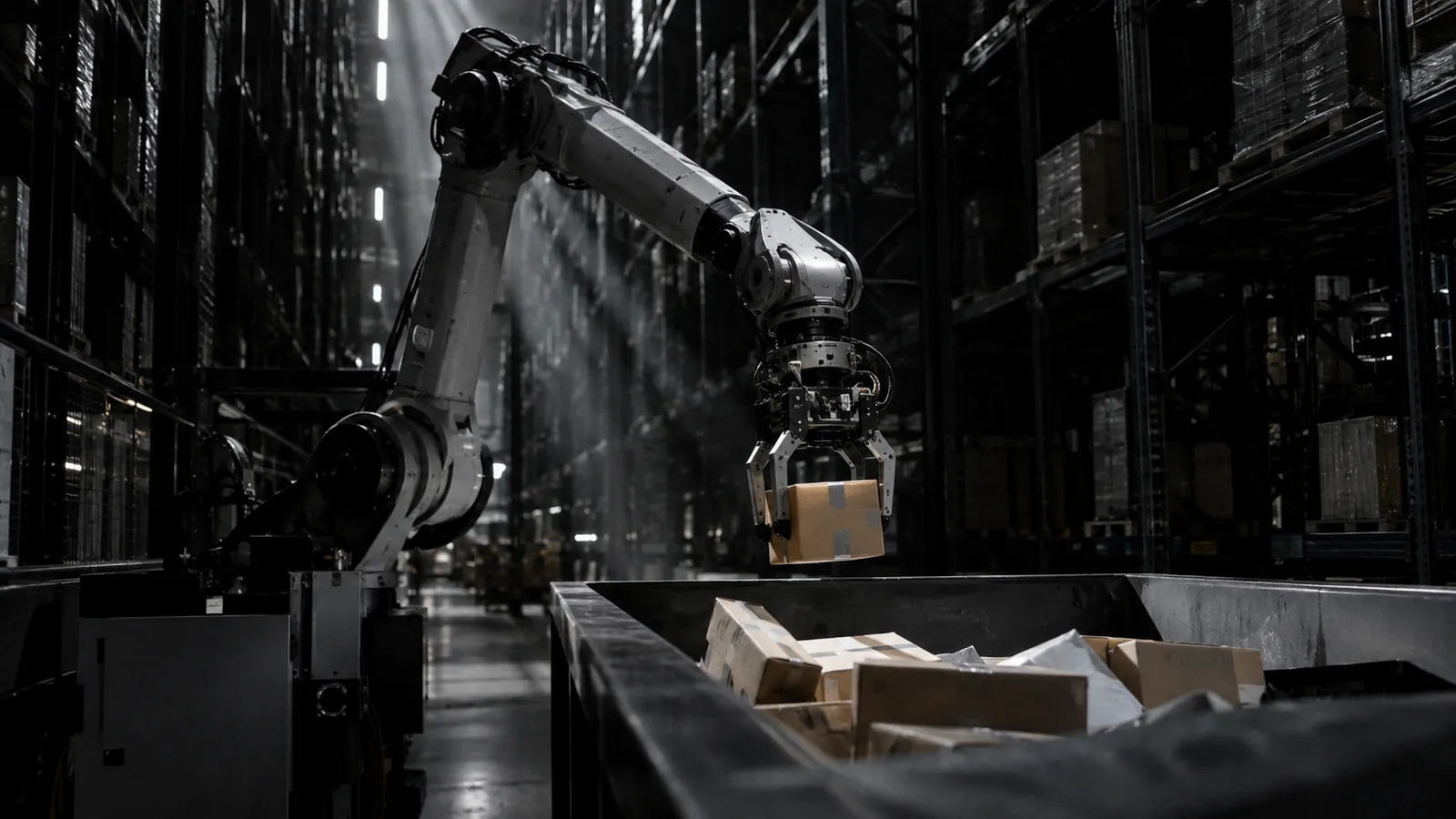
Robot arms, mobile manipulators and humanoids already do most of the picking, packing and tending in modern facilities. The hard part is the remaining few percent: the crushed box, the transparent bag, the part that sits slightly wrong in the fixture. A remote pilot clears those exceptions so the robot never sits idle waiting for someone to walk over.
What our pilots do
Pallet stacking and load optimisation
Pick-and-pack order fulfilment
Quality control and visual inspection
Inventory counting and cycle checks
Machine tending and changeover
How it works
Plug in. Your robots connect through our SDK or your own teleoperation stack. Cameras, joint states and gripper force stream to the pilot’s station alongside the robot’s task queue.
Deploy. Pilots supervise several robots at once and take over whenever a robot asks for help. Night shifts and weekends are covered remotely, so you do not need people on the floor just to unblock robots. Choose on-demand, business-hours or 24/7 coverage.
Learn. Every exception a pilot resolves is recorded and labelled by item, task and outcome. Those are exactly the cases your grasping and planning models need more of.
When remote pilots make sense
Remote pilots make sense when robots stall on a small share of tasks but those stalls stop the line, when night and weekend shifts are hard to staff, or when you run several sites and cannot keep a robotics technician at each one. A pilot pool shared across sites smooths out demand, and the labelled exceptions show your engineers which items and situations to fix first. If your robots rarely need help, on-demand coverage keeps the cost proportional.
Exceptions are your best training data. A pick that fails once a day across a fleet is a dataset in a month. Pilots resolve it in the moment, and the labelled episode goes back to your team.
The data you get back
Manipulation episodes are delivered as LeRobot, RLDS or HDF5, with synchronised video, joint states, gripper force and pilot control inputs. Each episode is labelled with the task, the item and whether it succeeded. The dashboard shows fleet status, operator assignments, intervention rates and session replay.
Who the pilots are
Fulfilment specialists, assembly operators and machine operators who know what a good pick or a good part looks like, trained on your robots and your process before going live.
Frequently asked questions
- How fast can a pilot take over a stuck robot?
- Pilots are already watching the fleet, so a takeover starts as soon as the robot raises its request. Response targets are part of the coverage you choose, and the dashboard reports them.
- Can you cover night shifts only?
- Yes. Many facilities use remote pilots for the shifts where staffing the floor is hardest. Tell us your hours when you request a quote.
- Do you work with our existing robot arms?
- If the arm exposes cameras and control through an SDK or a teleoperation interface, we connect to it. Mobile manipulators and humanoids work the same way.
- Will pilots slow down our throughput?
- Pilots only act when a robot needs help. The goal is to keep robots from waiting, and the intervention data helps your team reduce how often that happens.