Industry
Licensed pilots for delivery drones and sidewalk robots
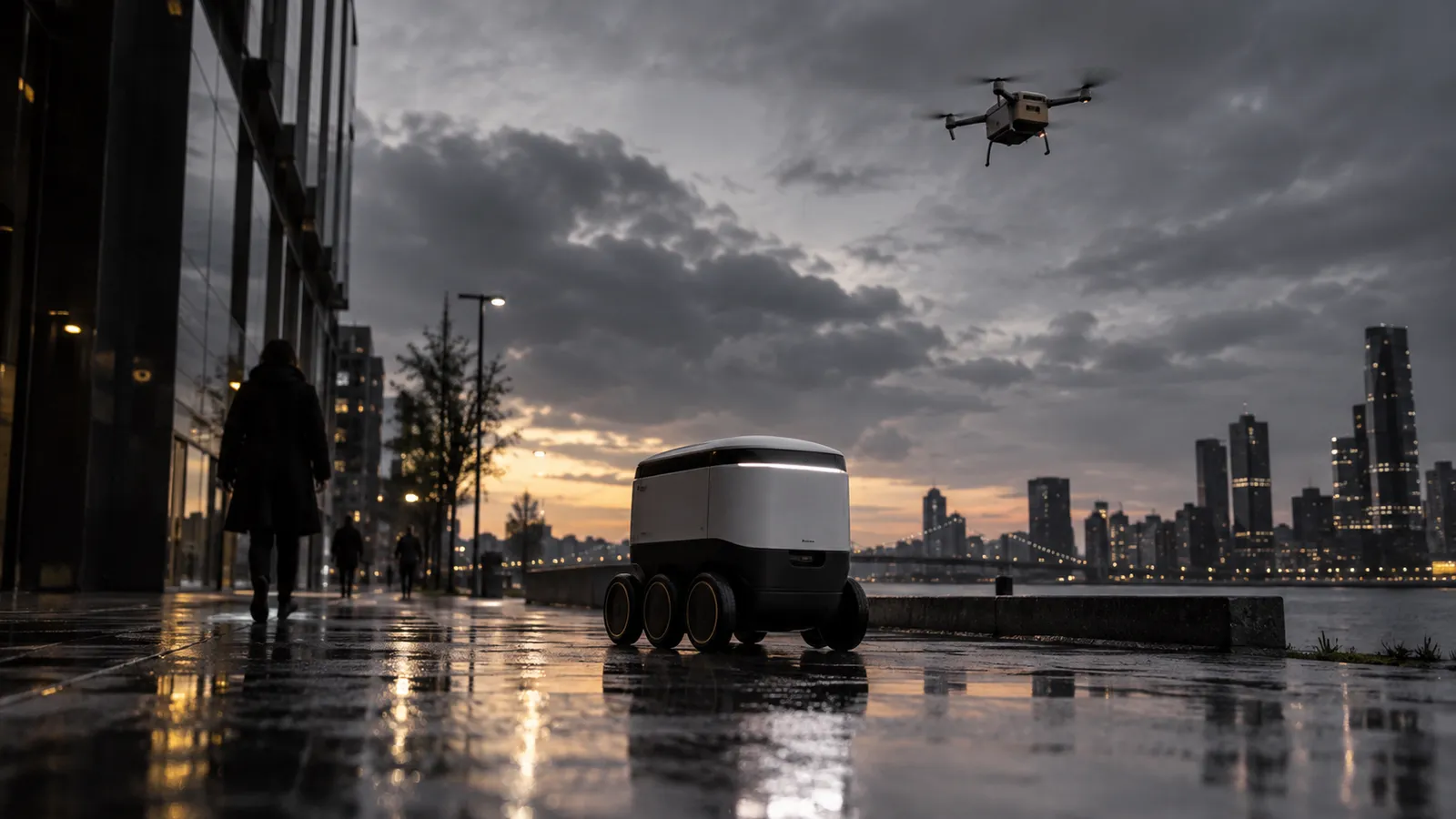
Last-mile delivery is the hardest mile. Our pilots supervise your aircraft and ground robots, step in when a delivery needs a person and log every outcome.
Updated
Marketplaces and logistics networks adding drone and sidewalk delivery run into the same wall: autonomy handles the happy path, and every blocked curb, gusty drop zone or confused recipient needs a human decision. RoboPilots staffs those decisions, on shift when you need them.
What our pilots do
Urban drone delivery navigation
Ground robot last-mile routing
Package handoff and verification
Weather and obstacle avoidance
Fleet coordination and dispatch
How it works
Plug in. Aircraft connect through their flight controller and ground robots through our SDK or your teleoperation stack. Video, GPS, battery state and robot status reach the pilot’s console.
Deploy. Pilots work in shifts that match your delivery hours: on demand, business hours or 24/7. They supervise in the background and take over when a vehicle asks for help or a delivery goes off-script.
Learn. Every exception becomes a labelled example your routing and autonomy teams can study, so the same situation needs a person less often next month.
When remote pilots make sense
Remote pilots fit networks that are scaling from a few test routes to real volume. In-house teams sized for peaks sit idle off-peak, and teams sized for averages fall behind on busy days. Shift-based remote coverage lets you match pilots to delivery windows, add a market without hiring locally, and keep a consistent escalation process across every city. Because each exception is logged with what happened and what the pilot did, operations and autonomy teams finally work from the same record.
Aviation rules apply. Remote drone operations are regulated differently in every country, including licensing, beyond-visual-line-of-sight approvals and pilot-to-aircraft ratios. Our pilots hold the licences their role requires, and your operating approvals define what they can fly.
The data you get back
Flight logs, drop outcomes and incidents come back labelled: where the flight was, what the pilot did and why. Ground robot sessions include synchronised video, telemetry and control inputs. The dashboard gives you live fleet monitoring, session replay and reporting on completion and intervention rates.
Who the pilots are
Licensed drone pilots, delivery and dispatch specialists and remote-operations staff. Each pilot is trained on your aircraft or robot, your routes and your escalation rules before their first shift.
Frequently asked questions
- How many drones can one pilot supervise?
- It depends on your operating approval and how autonomous your aircraft are. Where rules allow one pilot to supervise several aircraft, our pilots work that way and escalate when a flight needs full attention.
- Do you supply pilots for sidewalk delivery robots too?
- Yes. Ground robots are piloted the same way: supervised in the background, with a person taking over at crossings, obstacles and handoffs.
- Can you cover night and weekend deliveries?
- Coverage can be on demand, business hours or 24/7. Tell us your delivery windows when you request a quote.
- Who holds the operating approval?
- You do. Our pilots operate under your approvals and procedures, with the licences their role requires.