Industry
Remote pilots for autonomous vehicle and robotaxi fleets
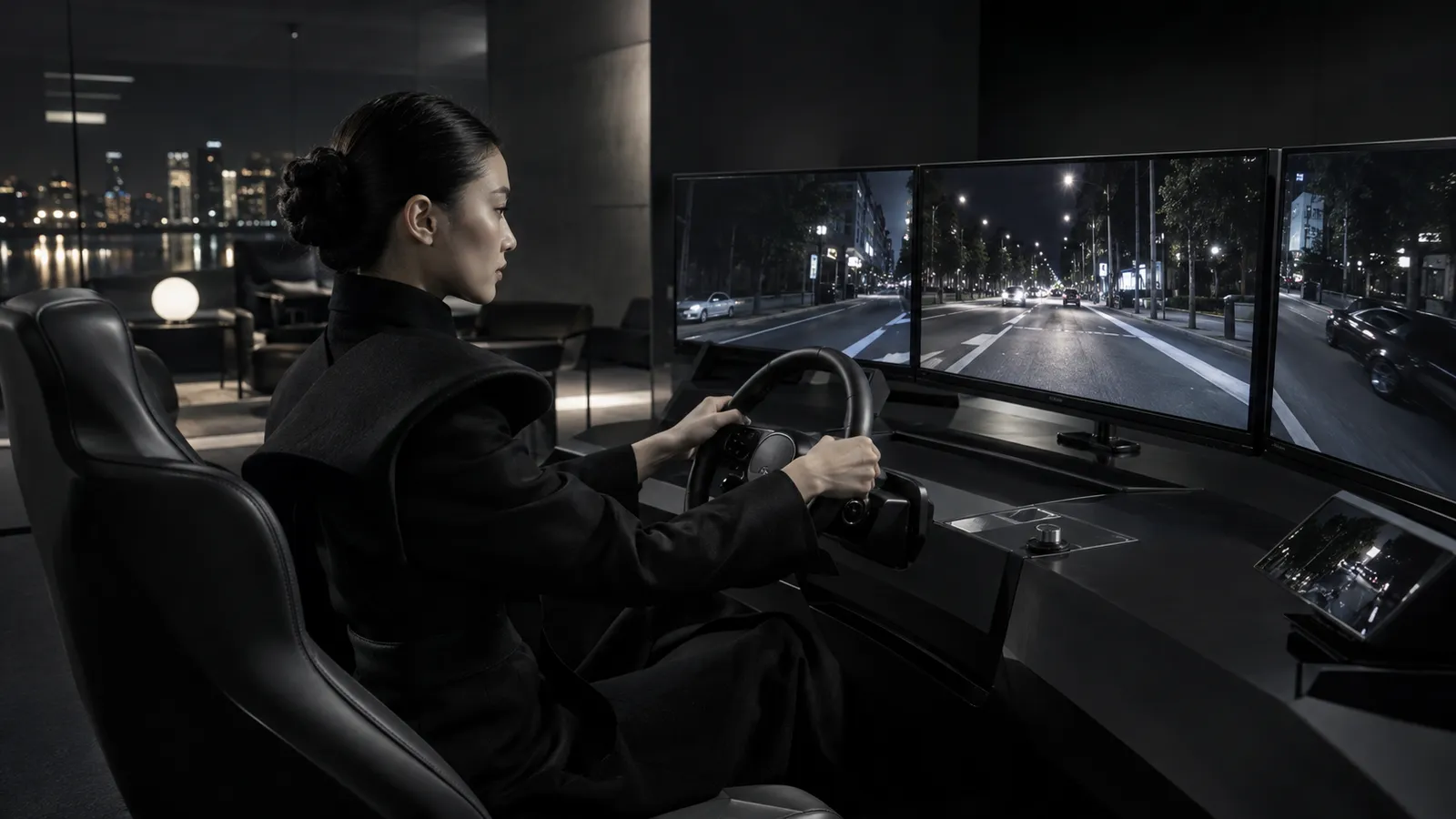
For automakers and robotaxi programs building their own driving systems: pilots who drive set routes, supervise the stack, take over remotely and log the edge cases you cannot stage.
Updated
Autonomy teams need two things from people: miles of carefully logged driving data, and someone to help when a vehicle cannot decide. RoboPilots provides both, as remote teleoperation for test fleets and remote assistance for vehicles in service.
What our pilots do
Drive set routes
Supervise the autonomy stack
Log every disengagement
Remote assistance for robotaxis
Edge-case collection
How it works
Plug in. We connect to the vehicle’s teleoperation interface. Cameras, lidar, CAN signals (steering, brake), GNSS and IMU reach the pilot, with latency shown on screen at all times.
Deploy. Pilots drive set routes, supervise the autonomy stack and take over remotely, or stand by as remote assistance for vehicles in service. Shifts are planned around your testing windows or your service hours, up to 24/7.
Learn. Drives are synchronised, tagged by scenario (lane change, unprotected left, takeover) and exported, ready for training and for replay in simulation.
When remote pilots make sense
Remote pilots fit programs that need more test miles than their in-house team can drive, that run tests in several cities, or that are moving from safety drivers in the vehicle to remote supervision. A shared remote team can follow your testing calendar across time zones, and consistent disengagement tagging makes results comparable between sites. For vehicles in service, remote assistance gives the fleet a person to ask without putting one in every car.
Safety case first. Remote driving and remote assistance are regulated differently across jurisdictions. We work inside your safety case, operating procedures and permits, and agree latency limits and fallback behaviour before any vehicle is driven remotely.
The data you get back
Drives are exported as MCAP or ROS 2 bags with every sensor stream and the pilot’s control inputs in sync. Disengagements and assistance requests carry a reason code and scenario tags. Session replay in the dashboard lets your engineers review any takeover frame by frame.
Who the pilots are
Experienced drivers, test drivers and remote-operations staff, trained on your vehicle platform, your operating procedures and your disengagement taxonomy before their first shift.
Frequently asked questions
- What is the difference between remote driving and remote assistance?
- In remote driving the pilot controls steering and speed. In remote assistance the pilot reviews the situation and gives the vehicle guidance, such as a route around a closure, while the vehicle’s own system still decides how to move.
- Which data formats do you export?
- MCAP or ROS 2 bags, with sensor streams, CAN signals and pilot inputs synchronised and tagged by scenario.
- How do you handle latency?
- Latency is shown to the pilot continuously, and limits are agreed per operation. If the link degrades past the limit, the vehicle falls back to its own minimal-risk behaviour.
- Can you support a small pilot program?
- Yes. Coverage can start with a few vehicles and specific testing windows, and grow with your fleet.