Robots · Drones
Autel EVO Max 4T remote operations: keeping a Covered List fleet flying, safely and on the record
Many US agencies and contractors bought EVO Max 4Ts before the FCC closed the door on new foreign drone authorizations. Those aircraft can keep flying. Here is how to run them well, remotely where the setup allows, while a program decides what comes next.
- Flight time
- 42 min (Autel test at 8 m/s, near-windless)
- Weight
- 1,665 g with battery and gimbal (V2)
- Thermal
- 640 x 512 uncooled VOx, -20 °C to +150 °C (high gain), 0 °C to +550 °C (low gain)
- Zoom camera
- 48 MP, 2.7–10x optical, up to 160x digital (V2)
- Laser rangefinder
- 5–1,200 m
- Video link
- SkyLink 3.0: up to 20 km (FCC), 1080p30, under 150 ms latency
- Wind
- 12 m/s in flight, 10.7 m/s for takeoff and landing
- Operating temperature
- -20 °C to +50 °C (no payload)
Updated
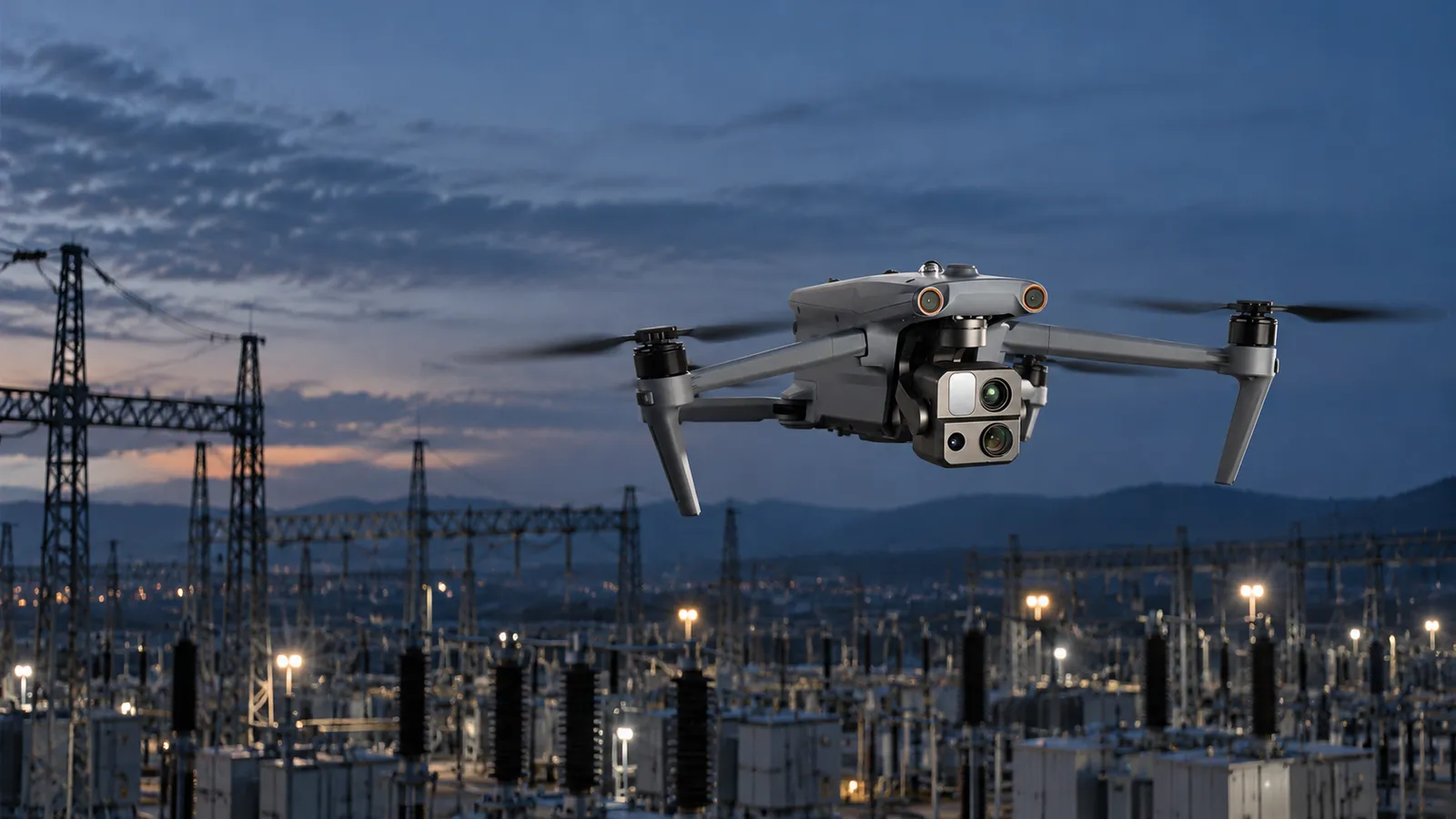
The Autel EVO Max 4T is a folding enterprise quadcopter with a four-sensor gimbal: a 48 MP zoom camera, a 48 MP wide camera, a 640 x 512 radiometric thermal camera and a 1,200 m laser rangefinder. It flies for up to 42 minutes, senses obstacles with stereo vision plus millimeter-wave radar, and can navigate by visual SLAM when satellite signals are weak. Wikipedia reports that Autel held about 7% of the US drone market in 2021 and that its aircraft were widely acquired by US law enforcement and government agencies. That installed base is now the overlooked side of the US fleet debate: aircraft that can legally keep flying, operated by programs that need trained pilots and clean records while they plan what comes next.
Where things stand, as of October 2026
Covered List
Firmware
Proposed sales cut-off
Tariffs
The practical reading for an operator: an EVO Max 4T fleet you already own can keep flying and stay patched for years, but replacements and spares may get harder to buy. Keep the fleet airworthy, document every flight, and plan the transition on your schedule rather than a regulator's. None of this is legal advice; agency procurement rules can be stricter than federal law.
How an EVO Max 4T is flown
Smart Controller V3 and Autel Enterprise
SkyLink 3.0
A-Mesh networking
Autel nest and cloud platform
Remote operation through the Cloud API
For a remote operations center, the most important piece is Autel's Cloud API. It is built on MQTT, HTTPS and WebSocket, and connects EVO Max aircraft to a third-party cloud platform through the Smart Controller, the dock, or directly over a mobile network. Autel's release notes trace what it can do:
V1.0.0 (March 2024)
V1.1.0 to V1.3.0 (late 2024)
V2.0.3 and V2.0.4 (2026)
In plain terms: a remote pilot can watch an EVO Max 4T live, send it routes, pause or cancel them, and command flight and gimbal through a cloud platform built on this API, provided the aircraft and controller firmware match the versions listed. Check firmware before planning on any feature, and treat command flight over a cellular link as supervised control, not close-quarters flying. SkyLink's sub-150 ms figure applies to the radio link only; anything relayed through the internet adds delay. Our latency guide explains why that matters.
Takeover and handoff
A-Mesh's dual-controller mode is the cleanest way to hand an EVO Max 4T between two people: for example, a pilot at the scene and a second operator handling the camera, or a field pilot who launches and a remote supervisor who watches. Write the handoff down: who holds primary control, the exact words to pass and accept it, what the secondary may and may not command, and what happens if either controller drops. In the US, one person may act as remote pilot for only one aircraft at a time without a waiver under 14 CFR 107.35, so A-Mesh's one-controller, multi-aircraft mode needs an approval before it is used in a US operation.
Supervising several docked aircraft
Programs that put EVO Max aircraft in Autel nests can run them from one operations desk: health alerts through HMS, scheduled routes issued from the cloud, live streams from every site, and remote logs from each dock. The supervision model is the same as for any docked fleet. One person watches the fleet view, the weather and the schedule. Each aircraft in flight has a remote pilot in command, and a second launch goes to a second pilot unless a waiver allows one pilot to fly more than one aircraft. Staffing is set by how many flights overlap at the busiest hour, not by the number of nests. Our fleet monitoring operator page describes the desk role.
Mission planning, airspace and observers
Most EVO Max 4T programs are public safety or inspection, so planning splits in two. For response flights, the plan is a standing template: altitude bands over the jurisdiction, no-go zones, preferred transit routes, launch points, and what to do when a crewed aircraft appears. For inspection, the plan is per asset: routes, camera and thermal settings, rangefinder use, and capture standards. The US default height cap is 400 ft, and Autel notes Autel Enterprise can be set higher, which no Part 107 program should do without an approval that allows it. BVLOS still needs a case-by-case waiver; the FAA's Part 108 rule has been at OIRA since July 10, 2026 with no firm publication date, per PickDrones. Where an approval relies on visual observers, their positions and call phrases belong in the plan.
Data from an EVO Max 4T
Thermal
Visual
Range and position
Storage and upload
Tag every flight by incident or asset, site, mission type and pilot of record. For a fleet that may be retired within a few years, consistent records also make the replacement case: flight counts, mission types, utilization and findings per site.
EVO Max 4T or a DJI Matrice 4T?
Both are compact enterprise thermal drones from foreign makers, and both sit under the same Covered List, firmware-waiver and DA 26-758 conditions as of October 2026. For an operator the differences are workflow: Autel's A-Mesh and dual-controller mode against DJI's ecosystem, a different cloud API, and different controller software. Pilots moving between them need type-specific training. For programs that must leave the Covered List entirely, the US-made alternatives on our list include the Skydio X10.
What a good EVO Max 4T pilot watches for
How RoboPilots runs EVO Max 4T fleets
Your aircraft, controllers and accounts stay yours. We train a dedicated group of Part 107 certified remote pilots on your EVO Max 4Ts, your firmware, your sites and your approvals before they fly live, and the same group stays on your program through whatever transition you plan.
One-week trial
Coverage
Data
Interfaces, specs and sources
- Autel Smart Controller V3 + Autel Enterprise
- A-Mesh (multi-aircraft, dual-controller, relay)
- Autel Cloud API (MQTT, HTTPS, WebSocket)
- Mobile SDK and Payload SDK
- Autel multi-rotor nest (dock)
- SkyLink 3.0
Availability: Autel Robotics is headquartered in Shenzhen, China. As of October 2026, the FCC's December 2025 Covered List action blocks new US equipment authorizations for foreign-made drones; previously authorized Autel aircraft can keep flying and, per an FCC waiver reported by DroneDJ, keep receiving firmware updates through at least January 1, 2029. Specs on this page come from Autel's current EVO Max 4T V2 spec sheet; earlier units differ in some camera details.
Specs are the maker's published figures, checked on . RoboPilots is not affiliated with Autel Robotics; product names are trademarks of their owners.
- Autel Robotics EVO Max 4T product page (V2 figures as published on Autel's Chinese-language site)
- Autel Robotics developer platform (Mobile SDK, Payload SDK, Cloud API)
- Autel Cloud API overview
- Autel Cloud API release notes
- Autel Robotics (Wikipedia)
- DroneDJ: FCC extends firmware updates for DJI and Autel to 2029 (May 2026)
- DroneXL: FCC Covered List, DA 26-758 and Section 232 tariffs (September 2026)
- 14 CFR 107.35, operation of multiple small UAS (LII)
- PickDrones: Part 108 BVLOS final rule at OIRA (September 2026)
Frequently asked questions
- Will Autel drones keep getting firmware updates in the US?
- Per an FCC waiver reported in May 2026, already-authorized Autel drones can keep receiving firmware and software updates through at least January 1, 2029. The waiver does not remove Autel from the Covered List.
- Can I still fly an EVO Max 4T in the US?
- Yes. The FCC Covered List action blocks new equipment authorizations for foreign-made drones but does not ground aircraft already owned. Agency and grant rules may be stricter, so check your own procurement policy.
- Can an EVO Max 4T be flown remotely?
- Autel's Cloud API supports live streaming, routes, route pause and cancel, and command flight with gimbal control through a third-party cloud platform, via the controller, the dock or a mobile network. Feature support depends on firmware version.
- Does Autel have a dock for the EVO Max?
- Autel lists a multi-rotor nest with a weather station, IP55 protection, about 25-minute charging from 10% to 90% at 25 °C and a 7 km operating radius. Autel's Cloud API release notes list support for the multi-rotor dock and a Nest2 dock.
- How long does the EVO Max 4T fly?
- Autel lists 42 minutes, measured at 8 m/s in near-windless conditions, and 37 minutes of hover. Real endurance is lower in wind and cold.