Industry
Remote operators for home and hospitality robots
Service robots meet the messiest environments there are. Our pilots handle the nuance, from fragile groceries to a guest who needs help, and teach your robot as they go.
Updated
Homes, hotels and rental properties are different every day. Labels face the wrong way, towels end up on the floor, and a resident asks for something nobody planned for. A trained pilot behind the robot closes the gap between what your autonomy handles and what your customers expect.
What our pilots do
Grocery unloading and kitchen stocking
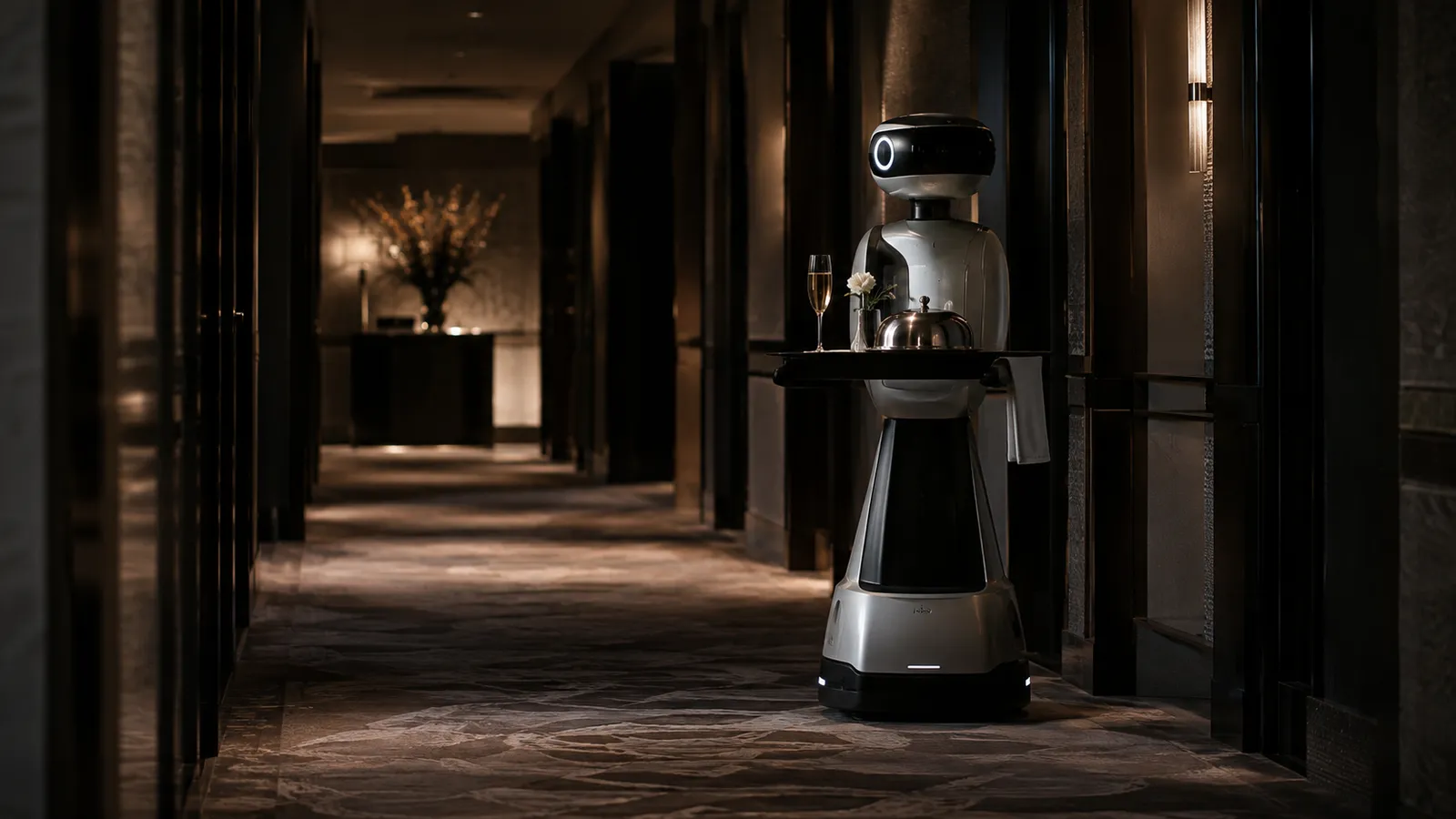
Room service and housekeeping support
Package receiving and sorting
Elderly and accessibility assistance
Retail shelf stocking and inventory
How it works
Plug in. Your robot connects through our SDK or your own teleoperation stack. Head and wrist cameras, joint states and gripper force reach the pilot’s station.
Deploy. A pilot trained on your robot runs tasks remotely, folding, loading and tidying, or monitors the robot and takes over whenever it asks for help. Coverage can be on demand, during business hours or 24/7, which suits hotels and care settings that never close.
Learn. Every intervention becomes a demonstration. Sessions are cut into episodes and labelled by task and outcome, so your policy learns from the exact moments it got stuck.
When remote pilots make sense
Remote pilots fit deployments where autonomy is good but not yet trusted alone: early home pilots, hotel rollouts across many properties, and care settings where a mistake matters. They let you launch with a complete service on day one instead of waiting for the policy to cover every case, while the sessions build the dataset that shrinks the pilot’s role over time. Pilots also cover quiet hours cheaply, since one person can watch several robots that rarely need help.
Privacy in homes comes first. Operating inside someone’s home needs their informed consent, and you decide what the pilot can see and what gets recorded. We agree camera, recording and retention rules with you before the first session.
The data you get back
Manipulation episodes are delivered as LeRobot, RLDS or HDF5, with camera streams, joint states, gripper force and pilot control inputs in sync. Labels cover the task (pick, fold, place), the object and the outcome. The dashboard adds live fleet monitoring and session replay across every property.
Who the pilots are
People with hospitality, housekeeping, retail and care backgrounds, trained to operate robots carefully around people and their belongings. Pilots are trained on your robot and your house rules before going live.
Frequently asked questions
- Can residents see when a pilot is connected?
- That is a product decision for your robot, and we recommend it. Many teams show a light or on-screen indicator whenever a remote operator is in control.
- What tasks are best suited to remote pilots in homes?
- Tasks that need judgment but not speed: tidying, folding, stocking and fetching. Pilots also handle the long tail of requests your autonomy has never seen.
- Can one pilot cover several robots?
- Yes, when the robots run autonomously most of the time and only ask for help on exceptions. The right ratio depends on how often your robots need a person, which we measure during the first weeks.
- How is recorded footage handled?
- Recording and retention are configured per deployment. You can limit what is captured, set retention periods and export or delete datasets from the dashboard.