Industry
Remote tradespeople for your skilled-trades robots
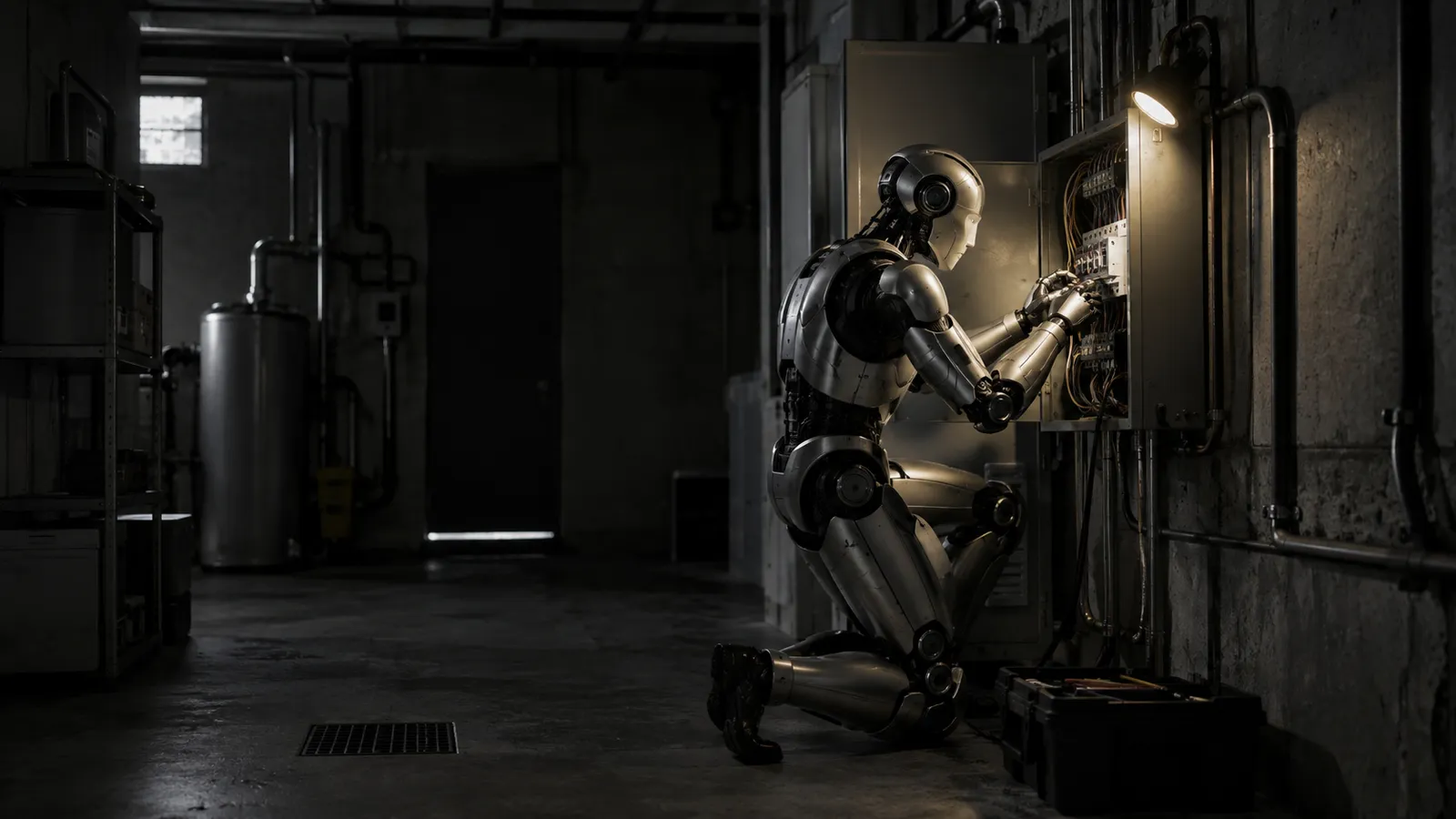
Experienced electricians, plumbers, HVAC technicians, welders and carpenters guide your robots through the work autonomy cannot do yet, without travelling to the site.
Updated
Trade work is full of judgment calls: a corroded fitting, a mislabelled breaker, a wall that is not quite square. Robots can reach the job site, but they still need someone who has done the job a thousand times. RoboPilots puts that person behind your robot, remotely.
What our pilots do
Electrical panel inspection and wiring
Plumbing diagnostics and repair
HVAC installation and maintenance
General construction and finish work
Equipment calibration and testing
How it works
Plug in. Your humanoid or mobile manipulator connects through our SDK or your own teleoperation stack. Head and wrist cameras, joint states and gripper force stream to the pilot’s station, so the pilot sees what the robot sees and feels how hard it is gripping.
Deploy. A pilot with the right trade background is matched to the job and trained on your robot. They run the task remotely, or wait in the background and take over whenever the robot asks for help. You choose coverage on demand, during business hours or around the clock.
Learn. Each session is recorded, cut into episodes and labelled by task and outcome. The interventions where a tradesperson corrected the robot are the most valuable demonstrations your policy can learn from.
When remote tradespeople make sense
Remote piloting pays off where skilled labour is scarce or travel is expensive: scattered maintenance sites, after-hours call-outs, and repetitive inspection rounds that tie up a senior technician for a day. One experienced pilot can move between robots on different sites in minutes, which no van can do. It also suits robot companies preparing a trades product, because every guided job doubles as a demonstration the robot learns from. Tasks that need a physical sign-off, or that are unsafe to attempt with your robot’s current reach and force, stay with people on site, and we will tell you which ones those are.
Regulated work stays regulated. Where electrical, gas or plumbing work requires a licensed professional, a licensed pilot supervises the task and local rules apply. We do not replace your permits or inspections.
The data you get back
Manipulation sessions are delivered as LeRobot, RLDS or HDF5 datasets: synchronised camera streams, joint states, gripper force and the pilot’s control inputs, with episode labels for the task, the tool used and whether it succeeded. Session replay in the dashboard lets your engineers scrub through any job frame by frame.
Who the pilots are
Working tradespeople and recently retired professionals who know the work, plus operators with robotics or remote-operations experience who are paired with them. Pilots are trained on your specific robot before they run a live job.
Frequently asked questions
- Can a remote pilot do licensed electrical or gas work?
- Only where local rules allow it and under the supervision of a professional licensed for that work. We match licensed pilots to regulated tasks, but permits, inspections and sign-off remain your responsibility.
- Which robots can tradespeople pilot?
- Humanoids, mobile manipulators and robot arms that expose cameras and control through an SDK or a teleoperation interface. If your robot already has a teleoperation stack, we connect to it.
- What happens if the connection drops mid-task?
- The robot should fall back to its own safe-stop behaviour, which we agree with you before going live. The pilot resumes when the link returns, and the interruption is logged in the session.
- Do we own the data from trade sessions?
- Datasets are delivered to you in standard formats. Retention and export settings are configured per deployment in the dashboard.